
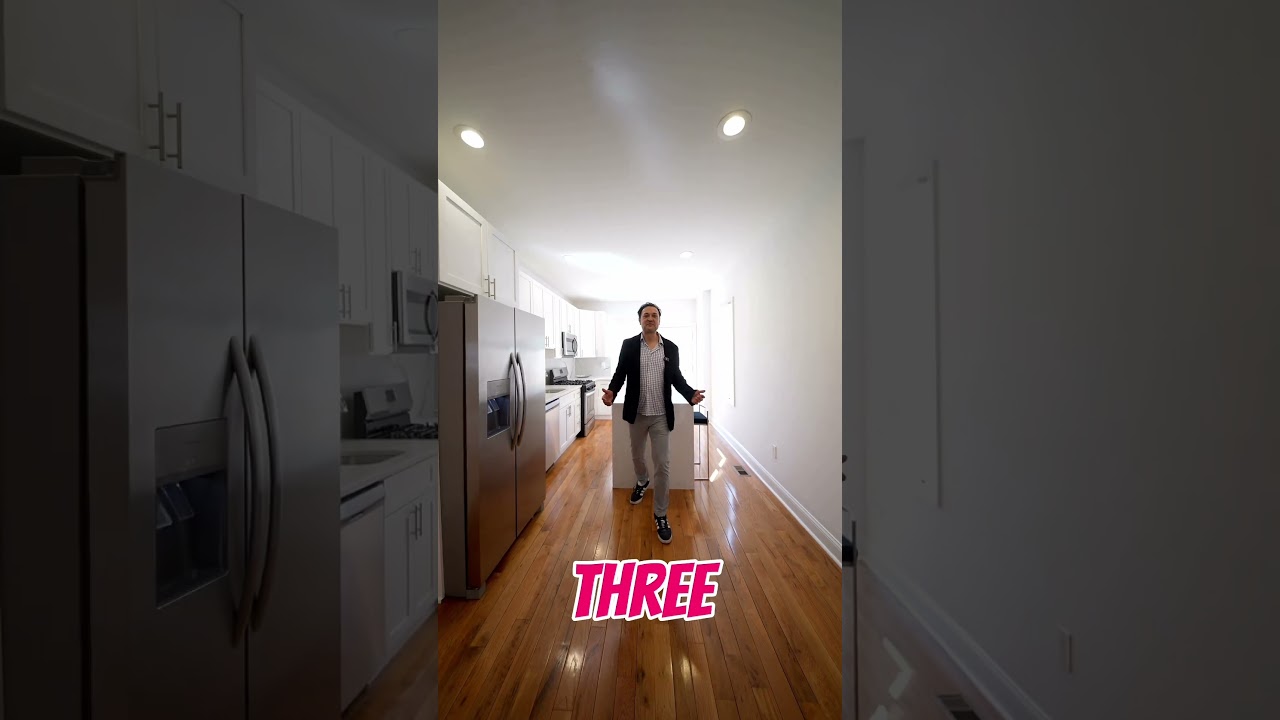
The Quick Answer (BLUF): Over the last twelve months, new-construction rowhomes in Point Breeze sold at a median of $484,000 against $290,000 for the older stock — a $194,000 gap. But per square foot the two are nearly the same, $287 versus $266, so you are mostly buying more house, not paying a new-construction premium. The number that should actually decide it is the tax abatement: on permits pulled since 2022 it shrinks 10% a year, and on a typical abated Point Breeze rowhome that phases about $320 back onto your tax bill every single year you own it.
The key data at a glance
Metric | Point Breeze baseline (12 months) | What it means for you |
|---|---|---|
Median sale price, all rowhomes | $310,000 across 563 recorded sales | Point Breeze runs about 24% above the $250,000 citywide median |
New construction, built 2015 or later | $484,000 across 74 sales | Roughly 1 in 8 sales on these blocks is new construction |
Older stock, built before 2015 | $290,000 across 489 sales | Still the default purchase here, by a wide margin |
Price per square foot | $287 new vs. $266 older | The true new-build premium is about 8%, not 67% |
Median size | 1,689 sq ft new vs. 1,092 sq ft older | New builds are about 600 sq ft bigger — that is the whole gap |
Parcels carrying a tax abatement | 2,755 of 14,574 rowhomes, about 19% | Median abated building value is $228,708, worth $3,201 a year in deferred tax |
Source: City of Philadelphia Office of Property Assessment, sales recorded 16 June 2025 – 16 June 2026 for parcels between Washington Avenue and Mifflin Street, Broad Street to 25th Street. The City's file keeps only the most recent sale per parcel, so a home that traded twice is counted once.
Deeper dive: 3 things you must know
1. The $194,000 gap is square footage, not a new-construction premium
The headline numbers make new construction look like a different market: $484,000 against $290,000. Divide by size and the story collapses. New builds on these blocks run about $287 per square foot against $266 for the older rowhomes — an 8% difference, which is roughly what you would expect to pay for a new roof, new systems, and a warranty.
The gap is size. The median new-construction rowhome here is 1,689 square feet against 1,092 for the older stock. Builders are putting up three-story, four-bedroom homes on lots that used to carry two-story, two-bedroom ones.
- Data point: 597 square feet of median size difference — about 55% more house.
- The action: Stop comparing sale prices and start comparing price per square foot. If you do not need 1,700 square feet, the older rowhome is not a compromise; it is the same value per foot at a much lower entry price and a much lower transfer-tax bill.
2. The abatement is a shrinking benefit — budget for year six, not year one
Philadelphia's 10-year residential abatement still exists, but for building permits issued since 2022 it declines every year under Ordinance 1456-A as amended. Year one exempts 100% of the building value. Year two exempts 90%. It steps down 10 points a year until year ten exempts just 10%.
Nearly one in five Point Breeze rowhomes — 2,755 of 14,574 — currently carries a building exemption beyond the homestead. The median exempt building value is $228,708. At the city's 1.3998% Real Estate Tax rate, that is $3,201 a year of tax that has not started yet.
- Step one: Ask the listing agent for the building permit date, not the settlement date. Permits issued before 2022 may still carry the old flat 100% abatement for the full ten years; permits after that are on the declining schedule.
- Step two: Ask which abatement year the property is in. A home in year three has seven step-downs left.
- Step three: Budget roughly a tenth of the abated tax as a yearly increase. On the median abated Point Breeze property that is about $320 more each year, every year — on top of any assessment increase.
- Step four: File for the Homestead Exemption either way. It removes $100,000 of taxable value, worth up to $1,399 a year, and the deadline is 1 December for the following year's bill.
3. If the new build is a condo unit, the $10,000 city grant disappears
This is the trap that costs Point Breeze first-time buyers real money, and it is written plainly into the program rules. The Philly First Home program gives first-time buyers up to $10,000, or 6% of the purchase price, whichever is lower. At Point Breeze prices the cap is always the flat $10,000.
But the grant covers a single-family home or a duplex only — no condominiums. A large share of new construction on these blocks is delivered as condo units, often marketed as "Unit A" and "Unit B" in a converted or purpose-built duplex shell. Two homes on the same block, at the same price, can differ by $10,000 in what the City will hand you, purely on how the deed is structured.
The second trap is timing. You must finish one-on-one counseling with a City-funded housing counseling agency before you sign the Agreement of Sale. Sign first and you are ineligible — there is no retroactive fix. Income limits run from $85,900 for a one-person household to $122,700 for four.
Working the numbers on your block
Medians are a starting point, not an answer. The blocks east of 18th Street and the blocks west of 22nd trade differently, and a home in abatement year two and one in abatement year eight are two different monthly payments at the same sale price.
If you want the price-per-square-foot and abatement math run on a specific Point Breeze address before you write an offer, send it over — that is a fifteen-minute conversation, not a listing appointment.
Local FAQ
What is the median rowhome price in Point Breeze right now?
Do I still get the full 10-year tax abatement on a new Point Breeze rowhome?
Can I use the $10,000 Philly First Home grant on a new-construction condo?
How much cash will I owe at the table beyond the down payment?
Drafted with AI assistance; every statistic is human-verified against primary sources before publishing.

About Martin Rodriguez
South Philadelphia REALTOR® with KW Empower — Grays Ferry, Point Breeze & Newbold specialist. Real answers, verified numbers, no pressure.